

At length, when the sight is dazed and the moon is buried in darkness; And the sun and moon are joined together that Day will Man say;
'Where is the refuge?'
Qur'an 7-10
Narrated Abu Musa: “The sun eclipsed and the Prophet got up, being afraid that it might be the Hour (i.e. Day of Judgment). He went to the Mosque and offered the prayer with the longest Qiyam, bowing and prostration that I had ever seen him doing. Then he said, "These signs which Allah sends do not occur because of the life or death of somebody, but Allah makes His worshipers afraid by them. So when you see anything thereof, proceed to remember Allah, invoke Him and ask for His forgiveness.” Volume 2, Book 18, Number 167 “It is reported in many books of Hadith that the day Prophet Muhammad's son Ibrahim died as a young infant, there was also a solar eclipse. Some people in Madina said that the sun eclipsed because of the death of Prophet's son. When the Prophet heard that he took his followers to the Masjid and had a long prayer. After the prayer, he gave them a sermon. In this sermon he praised Allah and then said, "O people, the sun and moon are two signs of the signs of Allah, they do not eclipse because of the birth or death of any person. But Allah warns His servants through them. When this happens you should rush to prayers.” Muslims pray during this time, not because of any superstition, but because we know that similar things will happen at the end of the world. We do not know when the end of the world will come, but when such signs appear, we do pray to Allah to remember Him and to seek His forgiveness.” Dr. Siddiqi, pakistanlink.com

Surah Al-Qiyamah (The Resurrection) 75:7-10
1. I do call to witness the Resurrection Day;2. And I do call to witness the self-reproaching Spirit.
3. Does man think that We cannot assemble his bones?
4. Nay, We are able to put together in perfect order, the very tip of his fingers.
5. But man wishes to do wrong (even) in the time in front of him.
6. He questions: “When is the Day of Resurrection?”
7. At length, when the sight is dazed
8. And the moon is buried in darkness
9. And the sun and moon are joined together that Day will Man say;
10. “Where is the refuge?”
11. By no means! No place of safety!
12. Before the Lord (alone), that Day will be the place of rest.
13. That Day will Man be told (all) that he put forward, and all that he put back.
14. Nay, man will be evidence against himself,
15. Even though he were to make excuses.
16. Move not thy tongue concerning the (Qur'n), to make haste therewith.
17. It is for Us to collect it and to promulgate it:
18. But when We have promulgated it, follow thou its recital:
19. Nay more, it is for Us to explain it:
20. Nay, (ye men!) but ye love the fleeting life,
21. And leave alone the Hereafter.
22. Some faces, that Day, will beam (in brightness and beauty)
23. Looking towards their Lord;
24. And some faces, that Day, will be sad and dismal,
25. In the thought that some backbreaking calamity was about to be inflicted on them;
26. Yea, when (the soul) reaches to the collarbone (in its exit),
27. And there will be a cry, "Who is a magician (to restore him)?”
28. And he will conclude that it was (the Time) of Parting;
29. And one leg will be joined with another:
30. The Day the Drive will be (all) to thy Lord!
31. So he gave nothing in charity, nor did he pray! -
32. But on the contrary, he rejected Truth and turned away!
33. Then did he stalk to his family in full conceit!
34. Woe to thee, (O man!), yea, woe!
35. Again, woe to thee, (O man!), yea, woe!
36. Does Man think that he will be left uncontrolled, (without purpose)?
37. Was he not a drop of sperm emitted (in lowly form)?
38. Then did he become a clinging clot; then did (Allah) make and fashion (him) in due proportion.
39. And of him He made two sexes, male and female.
40. Has not he, (the same), the power to give life to the dead?
surah 75:1-40 Al Qiyamah (The Resurrection)
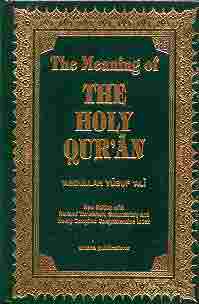
Abdullah Yusuf Ali, The Holy Qur'n, Amana Corporation, 1989.
The Solar Eclipse of Al-Qiyamah: A Reinterpretation of Surah 75:7-10 (PART ONE)

And on the Day—October 24, 1995—when the sun was eclipsed in the East (Turkey, Iran, Afghanistan, Pakistan, Turkmenistan, Uzbekistan, Tajikistan, Kazakhstan, Azerbaijan, Iraq, Syria, Jordan, Saudi Arabia, Yemen, Oman, United Arab Emirates, Qatar, Bahrain, Kuwait, Bangladesh, Maldives, Malaysia, Brunei, Indonesia), while simultaneously a Celestial Blast was manifested in the West (Montreal, Canada), this occurred by the Decree of Allah (SWT) alone—beyond the reach of human power or design—an unmistakable Sign confirming that this was the preordained eclipse by which the commencement of Al-Qiyamah was made manifest for the Ummah.
According to Dr. Kamil Kayejo Oloso five conditions have to be met by an event to qualify as a miracle from Allah:
1. That no one except Allah, the Lord and Master of the worlds, is able to do it by Himself or through any of His messengers.
2. That the incident breaks the usual norms and differs from the law of nature.
3. That it serves as a proof for the trust and claim of the messenger
4. That it happened in accordance with the messenger's claim, and
5. That the event happens through the messenger and no one else.
Table of Contents
1. Introduction: Re-examining the Signs of the End2. A Literal and Phenomenological Reading of Surah 75:7-10
3. The Logical and Theological Problems of a Cataclysmic Doomsday
4. The Solar Eclipse as a Divinely Ordained, Observable Sign
5. Al-Qiyamah as an Extended Period of Spiritual Awakening
6. The Web of Sure Signs: Contextualizing Al-Qiyamah
7. Interfaith Dimensions: The Role of the Paraclete and the Spiritual Resurrection
8. Conclusion: A New Paradigm for Islamic Eschatology
References
1. Introduction: Re-examining the Signs of the End
Islamic eschatology, the doctrine of the Yawm al-Qiyamah (Day of Resurrection), has for centuries been dominated by a narrative of sudden, cataclysmic destruction. Mainstream interpretations of key Quranic passages, particularly within Surah 75, Al-Qiyamah (The Resurrection), depict a terrifying end to the cosmos where the laws of nature are violently undone. Specifically, the verses describing the sight being dazed, the moon being eclipsed, and the sun and moon being "joined together" are almost universally understood as portents of a final, instantaneous apocalypse. This paper challenges that established view, presenting a rigorous exegetical argument that Surah 75:7-10 is not describing a metaphorical or supernatural cataclysm, but is instead a precise, literal description of a divinely ordained total solar eclipse that commences, rather than concludes, the period of Al-Qiyamah for the Ummah (the global Muslim community).
This reinterpretation posits that Al-Qiyamah is not a single day of destruction but an extended epoch of spiritual reckoning and awakening, a period during which humanity, and specifically the Muslim world, is called to witness the unfolding of God's signs and heed the "Great News" (An-Naba). The traditional view, which posits a world-ending event, creates a significant theological paradox: it renders nonsensical the Quranic emphasis on believers witnessing the Resurrection, listening to divine warnings, and understanding the Sure Signs that accompany this period. If the world is to end in a flash, to whom is the message of Resurrection directed, and for what purpose? This paper argues that Allah (SWT), in His infinite wisdom, desires for Muslims to be conscious participants in the process of Al-Qiyamah, a process inaugurated by a verifiable, natural-yet-divinely-timed celestial event.
By integrating a literal, phenomenological reading of the Quranic text with an analysis of supporting verses and an interfaith understanding of the role of the Holy Spirit, or Paraclete, this paper will demonstrate that the interpretation of Surah 75:7-10 as a solar eclipse resolves these deep-seated theological contradictions. It frames Al-Qiyamah as a period of collective spiritual transformation, initiated by a celestial sign that is both a mercy and a warning—a sign that has already come to pass.
This divine synchronization between Surah Qaf 50:42—“the Day when they will hear the Mighty Blast in truth”—and Surah Al-Qiyāmah 75:7–10, which commands the Ummah to witness the cosmic sign of the sun being eclipsed, is nothing less than a display of the unfathomable power of Allah (SWT) in identifying the specific, non-ordinary, heaven-decreed eclipse destined to herald Qiyāmah. When Muslims realize that simultaneously the Mighty Blast was witnessed in the West (Montreal, Canada) at the exact hour the prophesied total solar eclipse descended upon the Islamic nations in the East (Turkey, Iran, Afghanistan, Pakistan, Turkmenistan, Uzbekistan, Tajikistan, Kazakhstan, Azerbaijan, Iraq, Syria, Jordan, Saudi Arabia, Yemen, Oman, United Arab Emirates, Qatar, Bahrain, Kuwait, Bangladesh, Maldives, Malaysia, Brunei, Indonesia), they will be confronted—shockingly, awe-inspiringly, unmistakably—with a reality that no human, no scholar, no astronomer could orchestrate: only Allah can synchronize a celestial eclipse with a specific Blast perfectly synchronized with the solar eclipse, thereby marking the divinely appointed moment for His Ummah to recognize the unfolding of Al-Qiyamah.
This unprecedented alignment, which will be examined in detail in (PART TWO)—the witnessing of the Mighty Blast on October 23, 1995 at 9:35 p.m. in perfect simultaneity with the total solar eclipse of October 24, 1995 passing over the Islamic world—will shock and awe Muslims as to the absolute precision, majesty, and cosmic authority with which Allah (SWT) has identified the exact eclipse intended for His Ummah.
2. A Literal and Phenomenological Reading of Surah 75:7-10
The crux of this paper's argument rests upon a simple yet profound premise: that the language used in Surah 75:7-10 is not allegorical, but rather a precise and literal description of an observable astronomical event. For centuries, exegetes have interpreted these verses through a lens of supernatural cataclysm, assuming that the Day of Resurrection must involve the violent suspension of natural laws. However, if we approach the text from a phenomenological perspective—that is, describing the event as it would be experienced by a human observer—a total solar eclipse emerges as a startlingly accurate fit. This section will deconstruct each verse to reveal its direct correspondence with the stages of this celestial phenomenon.
Fa-itha bariqa al-basaru
At length, when the sight is dazed [1]
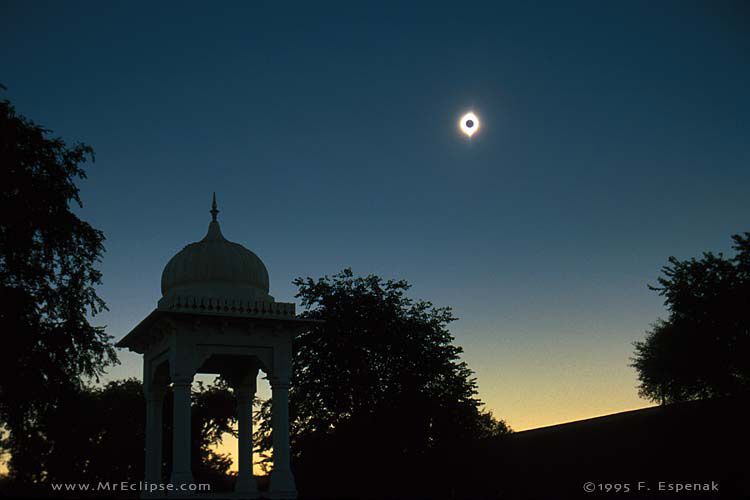
When the moon veiled the sun over Rajasthan, India on October 24, 1995, the day darkened beyond its measure, while in the West, a Celestial Blast manifested in Montreal, Canada. The eyes of humankind wavered, bewildered by what Allah had ordained. And behold! The corona of the sun flashed forth, a radiant crown piercing the gloom—a bariqa from your Lord, a clear Sign of His power, a warning and a reminder. None can avert it, nor could any escape His decree to bear witness to the Resurrection. Truly, these are signs for those who reflect on An-Naba, the Great Announcement of Al-Qiyamah.
The phrase bariqa al-basaru is traditionally interpreted as the sight being dazed or dazzled by the overwhelming glory and light of Allah (SWT) on Judgment Day. However, this interpretation carries a significant contradiction. An infinite, divine light, as described by those who have had mystical experiences, is one of pure love and beauty, which does not harm or daze the eyes. [2] A more direct and literal understanding of "dazed" sight points to a state of visual confusion and awe caused by a dramatic and unexpected change in ambient light. During a total solar eclipse, as the moon progressively obscures the sun, the sky darkens in an unnatural way, creating an eerie twilight. The human eye, struggling to adapt to the rapid decrease in light, is literally dazed. The visual spectacle of the sun's corona, a pearly white crown of light, suddenly appearing in the darkened sky is a sight that has historically invoked awe and fear, a perfect fulfillment of the term bariqa.
Wa-khasafa al-qamaru
And the moon is buried in darkness [1]
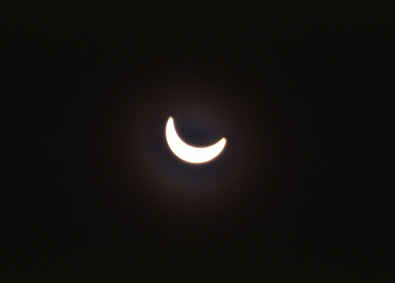
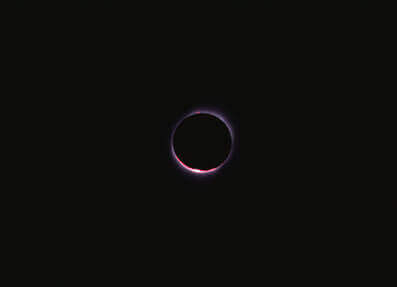
The word khasafa is explicitly used in Arabic to refer to an eclipse. While it can mean "to be buried" or "to lose light," its astronomical connotation is primary. Classical interpretations often struggle with this verse, suggesting the moon will simply lose its light or be destroyed. However, in the context of a solar eclipse, the meaning is perfectly clear and scientifically accurate. A solar eclipse occurs during the New Moon phase, when the moon is positioned between the Earth and the sun. During this phase, the side of the moon facing Earth is not illuminated and is therefore invisible, or "buried in darkness," against the bright backdrop of the sky. When it moves in front of the sun, it is a dark, unseen body that causes the eclipse. The Quran is thus describing the precise lunar condition required for a solar eclipse.
Wa-jumi'a al-shamsu wal-qamaru
And the sun and moon are joined together [1]
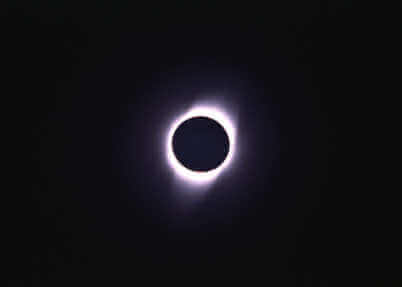
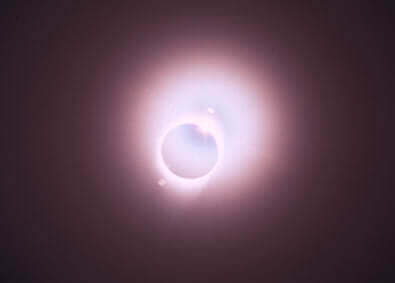
This verse is perhaps the most compelling evidence for the solar eclipse interpretation. The phrase jumi'a al-shamsu wal-qamaru—"the sun and the moon are joined together"—is a perfect phenomenological description of a total solar eclipse. From the perspective of an observer on Earth, the disk of the moon appears to cover the disk of the sun, and for a few minutes, they occupy the same space in the sky, appearing as a single, unified object. Traditional eschatology interprets this as a cataclysmic collision or merging of the two celestial bodies, an event that would annihilate the solar system. [3] But such a reading ignores the far more elegant and direct meaning: a visual conjunction. The event is not a collision, but a precise alignment, an astronomical syzygy that is both predictable by science yet profoundly significant when ordained by Allah (SWT) as a sign. The use of jumi'a (joined/gathered) perfectly captures this visual union without necessitating physical destruction.
Yaqoolu al-insanu yawma-ithinayn al-mafarru
That Day will Man say; Where is the refuge? [1]
The profound terror and majesty of a total solar eclipse—day collapsing into night and the sun's corona erupting like a ring of fire—have long ignited a primordial fear in ancient times.[4] Civilizations have historically interpreted such events as signs of cosmic upheaval, a tear in the fabric of creation. The Qur'an taps into this deep-seated anxiety in Surah 75:7–10, posing the urgent question: “Where is the refuge?”
This is more than a poetic device; it captures the visceral reaction of many Muslims confronting the true meaning of Al-Qiyāmah. The shock is theological, existential, and overwhelming. For generations, shaped by mistranslations and apocalyptic narratives, believers have envisioned a cataclysmic end of the physical world, still expecting graves to burst open and bodies to rise. This concept has long dominated the Islamic imagination, despite conflicting with both reason and deeper scriptural interpretation.
It is here that the teachings of Shri Mataji, revered as the Paraclete, offer a profound clarity. Speaking across hundreds of lectures on Qiyāmah, she pinpointed the source of this fear not in divine command, but in human distortion:

“Of course there are some absurd things which grew with misinterpretation and interference from unholy people, which are common in these religions. For example, Jews, Christian and Muslims believe that when they die their bodies will come out of their graves and they will all be resurrected at the Time of Resurrection, at the Time of Last Judgment, at the Time of Qiyamah. It is illogical to think what will remain inside those graves after five hundred years. Nobody wants to think and understand that it is not the body but the soul that will come out of these bodies, be born again as human beings and be saved through Qiyamah and Resurrection.
Who will tell them? No one can talk to them. As soon as one wants to talk one can be killed. This is the only way they know — how to kill.”
— The Paraclete Shri Mataji, Meta Modern Era, Divine Cool Breeze Books, 1997, p. 15
This single quotation, one of many, reveals why the Qur'anic question “Where is the refuge?” resonates so powerfully today. Its power comes not from the prospect of Qiyāmah as a catastrophe, but from the fact that generations of Muslims have been conditioned to fear a fundamentally false eschatology.
3. The Logical and Theological Problems of a Cataclysmic Doomsday
The traditional interpretation of Al-Qiyamah as a single, instantaneous day of cosmic destruction, while deeply entrenched, presents a series of profound logical and theological problems. This framework, which envisions the sun and moon colliding and the world ending in a flash, inadvertently undermines the very purpose of the Resurrection as described throughout the Quran. If Al-Qiyamah is an event of total annihilation, then the numerous Quranic injunctions for believers to witness the Resurrection, listen to its news, and understand its signs become purposeless. This section will explore these contradictions, arguing that a cataclysmic doomsday scenario is incompatible with the divine wisdom that permeates the Quranic narrative.
The most significant issue is the paradox of witness. Surah 75 begins with Allah (SWT) taking an oath by the Resurrection Day and the "self-reproaching Spirit," indicating that both are phenomena to be experienced. [5] Furthermore, the Quran repeatedly speaks of the "Great News" (An-Naba), about which humanity is in dispute but will soon "come to know." [6] How can humanity "come to know" this Great News if the world has already ended? What is the purpose of a message if there is no one left to receive it, or no time in which to comprehend it? A sudden apocalypse allows for no period of reflection, no opportunity for the "self-reproaching Spirit" to awaken, and no chance for the Ummah to understand the unfolding of God's plan. It reduces the majestic and meaningful process of Resurrection to a mere spectacle of destruction.
Moreover, the Quran presents a series of "Sure Signs" that are meant to be recognized and understood by believers as precursors and components of Al-Qiyamah. These include events that are explicitly historical and temporal, such as the gathering of the Children of Israel (fulfilled in 1948) [7], and spiritual conditions, such as Allah (SWT) turning away from the Muslims and giving them little of His Ruh (Spirit). [8] These signs are not instantaneous; they are processes that unfold over time, intended to serve as warnings and guideposts. A cataclysmic end-of-the-world scenario renders this entire web of signs meaningless. They become historical footnotes rather than active, living warnings for the generation that will witness the commencement of the Resurrection. The only interpretation that gives these signs their full weight and purpose is one where Al-Qiyamah is an extended period, allowing for these signs to be observed, understood, and acted upon. The solar eclipse, therefore, is not the end itself, but the starting point—the great, undeniable announcement that the age of spiritual reckoning has begun.
4. The Solar Eclipse as a Divinely Ordained, Observable Sign
If the textual evidence points so clearly to a solar eclipse, the question then becomes: which one? The Quran itself provides the answer by demanding a sign of such magnitude and precision that it would be utterly beyond human manipulation, thus confirming its divine origin. This paper posits that the total solar eclipse of October 24, 1995, is the specific, preordained event that commenced Al-Qiyamah. This was not just any eclipse; its timing, location, and, most critically, its synchronization with another inexplicable event, mark it as the unmistakable "Great Announcement" (An Naba).
The path of totality for the October 24, 1995, eclipse swept directly across the crescent of the Muslim world. [9] For millions in the Ummah, the sky fulfilled the prophecy of Surah 75:7-10 with stunning accuracy. The sight was dazed as daylight faded into an otherworldly twilight, the moon was indeed "buried in darkness" as it passed before the sun, and the two celestial bodies were visually "joined together" in the sky. This event, observable and verifiable, served as a literal fulfillment of the Quranic description. It was a sign written not in a book, but across the heavens for all to see.
However, the ultimate proof of this eclipse's divine ordination lies in its perfect, inexplicable synchronicity with another prophesied event: the "Mighty Blast" or "Cry" (al-sayhah) of Surah 50:42, which states, "The Day when they will hear the Cry in all truth: that will be the Day of coming forth (from the graves)." As the solar eclipse was unfolding in the East, a powerful and mysterious celestial blast was witnessed by two people—Kashwinder Singh and Mathew Berry McIntyre—in Montreal, Canada, in the West. [10] The simultaneity of these two events—a prophesied eclipse in the heart of the Islamic world and a prophesied celestial blast on the other side of the planet—constitutes a miracle of divine timing absolutely beyond the possibility of human contrivance or manipulation. It meets the rigorous criteria for a divine sign: it is extraordinary, breaks the usual norms of isolated phenomena, and serves as a proof for the claim of the messenger—in this case, the message of the commencement of Al-Qiyamah delivered by the Paraclete, Shri Mataji Nirmala Devi. [11] This dual event is the Great News, the undeniable announcement that the age of spiritual reckoning has begun, demanding a great awakening from the Ummah.
5. Al-Qiyamah as an Extended Period of Spiritual Awakening
The recognition of the 1995 solar eclipse as the commencement of Al-Qiyamah necessitates a fundamental shift in understanding the nature of the Resurrection itself. It is not a final, destructive act, but the inauguration of an extended spiritual epoch. This interpretation resolves the theological paradoxes created by the doomsday scenario and aligns perfectly with the Quran's broader narrative, which emphasizes a period of reckoning, guidance, and spiritual transformation. The purpose of the "Great News" is not to announce an end, but to trigger a great awakening.
The opening verses of Surah 75 itself allude to this extended timeline. Allah (SWT) swears an oath not only by the "Resurrection Day" but also by the "self-reproaching Spirit" (al-nafs al-lawwamah). [5] This spirit of self-reproach, of introspection and moral reckoning, is not a fleeting sensation experienced in the final moments of life. It is a process of spiritual development that requires time. The commencement of Al-Qiyamah is the catalyst for this spirit to awaken within humanity on a collective scale. It is a call to look inward, to confront one's deeds, and to seek the refuge that is not a physical place, but a state of spiritual purity and connection with the Divine.
This concept is further reinforced by Surah 78, An-Naba (The Great News). The opening verses speak of a dispute concerning this news, a dispute that will be settled when humanity shall "soon (come to) know." [6] The repetition of "verily, they shall soon come to know" implies a process of dawning realization, not an instantaneous, shocking end. The Great News of the Resurrection, announced by the celestial signs of 1995, is a message that must be spread, heard, and understood. This requires an era, not a moment. It is the age of the promised Comforter, the Paraclete, whose role is to guide humanity to the truth and to explain the deeper meanings of the scriptures—a role fulfilled by Shri Mataji Nirmala Devi through the advent of Sahaja Yoga. [12] The Resurrection, therefore, is the period of this final, collective enlightenment, where the opportunity for spiritual ascent through the awakening of the Kundalini energy is made available to all who seek it. It is the ultimate fulfillment of Allah's (SWT) promise, a time for the Ummah and all of humanity to witness the truth of the Spirit and achieve the true purpose of their creation.
6. The Web of Sure Signs: Contextualizing Al-Qiyamah
The interpretation of Al-Qiyamah as an extended spiritual epoch, inaugurated by the 1995 solar eclipse, is not based on Surah 75 alone. It is supported by a network of interconnected Quranic verses that describe the conditions and events of this era. These "Sure Signs" paint a picture of a world in spiritual decline, yet ripe for a divine intervention led by the Ruh (Spirit). They are not random occurrences but integral parts of the divine plan, setting the stage for the Great Announcement and the subsequent awakening. When viewed as processes unfolding over time, rather than as instantaneous events on a single Doomsday, their true meaning and relevance to the present age become clear.
One of the most significant historical signs mentioned in the Quran is the prophesied re-gathering of the Children of Israel. Surah 17:104 states, "And We said thereafter to the Children of Israel, 'Dwell securely in the land (of promise)': But when the second of the warnings came to pass, We gathered you together in a mingled crowd." [7] The establishment of the state of Israel in 1948 is a clear and undeniable fulfillment of this prophecy, marking a critical milestone in the timeline leading to Al-Qiyamah. This historical event, occurring in the 20th century, is a powerful indicator that the age of Resurrection is a contemporary one, not a distant, future cataclysm.
The Quran also describes a specific spiritual state that would befall the Ummah during this time. Verses such as Al-Baqarah 2:174, which states that Allah (SWT) will "not speak to them on the Day of Resurrection," and Al-Isra 17:85, which laments that "of knowledge, it is only a little that is communicated to you (O men!)," point to a period of spiritual estrangement. [8] This is not a literal silence, but a condition where the deeper, esoteric truths of the faith become obscured by rigid dogma and materialism. It is a time when, as foretold by Iblis in Surah 7:16, the majority are overpowered and misled. [13] This spiritual malaise creates the very need for a new divine intervention, a sending down of the Ruh as described in An-Nahl 16:2, to revive the true spirit of the religion. [14]
This intervention is the "Baptism of Allah" (Sibghatullah) mentioned in Al-Baqarah 2:138. [15] This is not a water baptism, but a spiritual immersion into the divine, made possible through the awakening of the Kundalini energy by the Holy Spirit (the Paraclete). It is the mechanism of the Resurrection itself, a transformation from a state of spiritual ignorance to one of enlightened awareness. These signs, taken together, do not describe the end of the world. They describe the conditions for the renewal of the world through a collective spiritual experience, an experience that began with the unmistakable celestial announcement in 1995.
7. Interfaith Dimensions: The Role of the Paraclete and the Spiritual Resurrection
The great awakening announced by the 1995 solar eclipse is not an exclusively Islamic phenomenon but the fulfillment of prophecies shared across the Abrahamic faiths. The Quran itself points to this universal dimension through the figure of the Paraclete. In Surah 61:6, Jesus (Isa) prophesies the coming of a messenger named Ahmad. While traditionally interpreted as another name for Prophet Muhammad, a deeper esoteric understanding, supported by the context of Al-Qiyamah, reveals Ahmad ("the most praised") as a title for the Holy Spirit, the Comforter or Paraclete promised by Jesus in the Gospel of John. [16] Jesus states, "But the Comforter, which is the Holy Ghost, whom the Father will send in my name, he shall teach you all things, and bring all things to your remembrance, whatsoever I have said unto you" (John 14:26). This figure is not another law-giving prophet, but a spiritual guide, a teacher, and a reminder of eternal truths.
This paper posits that the promised Paraclete, the Holy Spirit, the Ruh of Allah (SWT), and the Adi Shakti of the Hindu scriptures are one and the same divine feminine power, which incarnated in the modern era as Shri Mataji Nirmala Devi. Her advent fulfills the prophecies of a universal mother and guide who would inaugurate the "Age to Come" and grant humanity the mechanism for its spiritual ascent. Her role was not to create a new religion, but to bring to fruition the promises of all existing religions by providing the practical experience of Self-realization, or spiritual resurrection. This is the "Great News" in its most profound sense: the announcement that the means for collective spiritual transformation is now available to all.

The method for this transformation is Sahaja Yoga, the system of meditation revealed by Shri Mataji. The core of Sahaja Yoga is the awakening of the Kundalini, a dormant spiritual energy coiled at the base of the spine. [17] Upon its awakening, the Kundalini ascends through the central channel of the subtle system, piercing the fontanelle bone area (the taloo) and connecting the individual consciousness with the all-pervading power of the Divine. This is the true "second birth," the "Baptism of Allah," and the literal experience of resurrection. It is not a resuscitation of a physical body after death, but the resurrection of the human spirit into a new dimension of awareness while still in this body. It is a tangible, verifiable experience, felt as a cool breeze (vibrations) on the palms of the hands and above the head. [18] This is the mechanism by which the Ummah and all of humanity can heed the call of Al-Qiyamah, cleanse their "self-reproaching Spirit," and enter into the Kingdom of God, which Jesus declared is within us. The 1995 eclipse was the divine signal that this age of collective resurrection had begun.
8. Conclusion: A New Paradigm for Islamic Eschatology
The traditional Islamic understanding of Al-Qiyamah as a sudden, cataclysmic end to the world, while long-held, is fraught with theological inconsistencies and logical paradoxes. This paper has presented a rigorous exegetical and phenomenological argument for a new paradigm: one in which Al-Qiyamah is an extended spiritual epoch of collective awakening, commenced by a divinely ordained, observable celestial event. The literal, straightforward reading of Surah 75:7-10 reveals not a cosmic collision, but a precise and elegant description of a total solar eclipse—an event where the sight is dazed, the moon is darkened, and the sun and moon are visually joined together.
This interpretation identifies the total solar eclipse of October 24, 1995, which was visible across the heart of the Muslim world, as the specific fulfillment of this prophecy. Its divine authentication is sealed by its perfect synchronicity with an unexplained "Mighty Blast" in the West, creating a dual sign absolutely beyond human manipulation. This celestial event was the An Naba, the Great News and the Great Announcement, heralding not the end of the world, but the beginning of the age of Resurrection—an era for humanity to witness the Sure Signs of God, heed the call of the "self-reproaching Spirit," and embrace the spiritual transformation offered by the promised Paraclete.
By contextualizing this event within a web of supporting Quranic verses and understanding the Resurrection as a spiritual process of Kundalini awakening, facilitated by the Holy Spirit (Ruh) in the person of Shri Mataji Nirmala Devi, the apparent contradictions of classical eschatology are resolved. The purpose of the Resurrection is not to end the world, but to save it by offering a tangible path to spiritual ascent. The solar eclipse was the starting point for this great awakening. The call now is for the Ummah and all seekers of truth to recognize these signs, listen to the Great News that has been delivered, and participate in the collective resurrection that is the true meaning of Al-Qiyamah. The Day of Resurrection is not coming; it is already here.
References
[1] Abdullah Yusuf Ali. "The Holy Qur'an: Text, Translation and Commentary." Amana Corporation, 1989. Surah 75:7-10.[2] Adi Shakti. "The Light of the Lord." adishakti.org. Accessed 10 Dec. 2025.
[3] Ibn Kathir. "Tafsir Ibn Kathir." quran.com. Accessed 10 Dec. 2025. Commentary on Surah 75:9.
[4] NASA. "History and Lore of Eclipses." nasa.gov. Accessed 10 Dec. 2025.
[5] Al-Qiyamah.org. "Surah 75 Ayat 1-2." al-qiyamah.org. Accessed 10 Dec. 2025.
[6] Yusuf Ali, Abdullah. "The Holy Qur'an: Text, Translation and Commentary." Surah 78:1-5.
[7] Al-Qiyamah.org. "Sure Signs of Al-Qiyamah." al-qiyamah.org. Accessed 10 Dec. 2025. Citing Surah 17:104.
[8] Al-Qiyamah.org. "Sure Signs of Al-Qiyamah." al-qiyamah.org. Accessed 10 Dec. 2025. Citing Surah 2:174 and 17:85.
[9] Wikipedia. "Solar eclipse of October 24, 1995." Wikipedia, Wikimedia Foundation, 20 Sept. 2025.
[10] Adi Shakti. "Mighty Blast In Sky Has Occurred." adishakti.org. Accessed 10 Dec. 2025.
[11] Oloso, Kamil Kayejo. As cited in "Miracle Criteria." adishakti.org. Accessed 10 Dec. 2025.
[12] Shri Mataji Nirmala Devi. "The Advent of Sahaja Yoga." shrimataji.org. Accessed 10 Dec. 2025.
[13] Al-Qiyamah.org. "Sure Signs of Al-Qiyamah." al-qiyamah.org. Accessed 10 Dec. 2025. Citing Surah 7:16.
[14] Al-Qiyamah.org. "Sure Signs of Al-Qiyamah." al-qiyamah.org. Accessed 10 Dec. 2025. Citing Surah 16:2.
[15] Al-Qiyamah.org. "Sure Signs of Al-Qiyamah." al-qiyamah.org. Accessed 10 Dec. 2025. Citing Surah 2:138.
[16] Adi Shakti. "The Prophecy of Ahmad." adishakti.org. Accessed 10 Dec. 2025.
[17] Shri Mataji Nirmala Devi. "Spiritual Awakening." shrimataji.org. Accessed 10 Dec. 2025.
[18] Sahaja Yoga. "The Experience of Self-Realization." sahajayoga.org. Accessed 10 Dec. 2025.
Compilation, Proclamation, and Exegesis of Surahs Upholding Allah’s (SWT) Command to His Ummah — to Witness and Participate in the Resurrection.
Al-Qiyamah: A Profound Declaration of Al-QiyamahAl-Qiyamah (75:1-2): Oaths of Resurrection
Al-Qiyamah (75:3-4): Reassembling Bones and Fingertips
Al-Qiyamah (75:5-6): Man's Denial of Resurrection
Al-Qiyamah (75:7–10) Sun and Moon 'Joined' At Solar Eclipse
Al-Qiyamah (75:11–13) – No Refuge, Only Reckoning
Al-Qiyamah (75:14–15) – Man: His Own Witness and Judge
Al-Qiyamah (75:16–19) – Revelation Safeguarded by Allah (SWT)
Al-Qiyamah (75:20–21) – Love of The Fleeting World
Al-Qiyamah (75:22–25) – Ruh’s Face Brings Glory Or Gloom
Al-Qiyamah (75:26–30) – Death and Soul's Departure Home
Al-Qiyamah (75:31–35) – Rejection and Arrogance Of Kaffirs
Al-Qiyamah (75:36–40) – Is Resurrection Beyond Creator?
Al-Baqarah (2:138) – Baptism of Allah (SWT) You Were Unaware
Al-Baqarah (2:174) – Allah (SWT) Will Not Address Muslims
Al-A'raf (7:16) – Iblis: I Will Lie In Wait and Overpower Them
Al-A'raf (7:146) – Allah: I Will Turn Them Away From My Signs
Al-Hijr (15:39) – Iblis: I Will Wake (Evil) Fair and Mislead Them
An-Nahl (16:2) – Allah (SWT) Sent Down Angels With His Ruh
Al-Isra (17:85) – Muslims Given Little of Allah's (SWT) Ruh
Al-Isra (17:104) – Children of Israel Gathered Again (in 1948)
Maryam (19:34–39) – Warning of Jesus You Were Unaware Of
Al-Hajj (22:8) – Kitab Al-Munir You Were Unaware Of
Al-Rum (30:56) – The Day of Qiyamah You Were Unaware Of
Fatir (35:9) – Winds of Qiyamah You Were Unaware Of
Yassin (36:63-68) – This Is The Hell You Were Warned Of.
Sad (38:79) – Iblis Allowed to Mislead Muslims And He Did
Fussilat (41:20–21) – Your Hands Will Testify of Qiyamah
Fussilat (41:53) – We Will Show Our Signs Within Your Soul
Az-Zukhruf (43:61): Jesus, Sign of Hour You Were Unaware
Az-Zukhruf (43:62): Satan's Deception of the Muslim Ummah
Az-Jathiya (45:7-14) – Those Who Deny Allah's Revelations
Qaf (50:20–21) – Hidden Imam Mahdi You Were Unaware
Qaf (50:41) – Listen To The Caller Emerging From Within
Qaf (50:42) – Day They Will Hear of Mighty Blast Witnessed
Qaf (50:45) – By the Caller, My Warning Is Delivered
Al Dhariyat (51:20-22) – Our Signs on Earth and Within
Al-Hadid (57:25) – Allah's (SWT) Iron Has Been Delivered
Al-Mujadilah (58:21) – My Messengers Must Prevail
Al-Saff (61:8–9) – Revelation of Light You Were Unaware
Al-Muddaththir (74:1–2) – My Cloaked One: Deliver Warning
Al-Mursalat (77:1–10) – Angels Sent You Were Unaware
An-Naba (78:1–5) – Concerning What Are They Disputing?
Al-Infitar (82:17–18) – What Will Explain To You? What Will?
Al-Mutaffifin (83:1–6) – Dealers in Fraud You Were Unaware
Al-Tariq (86:1–3) – The Night Visitant You Were Unaware
Al-Qadr (97:1–5) – Blessed Night of Power and Fate Before:
Al-Qariah (101:1–11) – Terrifying Day of Noise and Clamour
Concerning what are they disputing?
Concerning the Great News. [5889]
About which they cannot agree.
Verily, they shall soon (come to) know!
Verily, verily they shall soon (come to) know!
surah 78:1-5 An-Naba (The Great News)
"5889. Great News: usually understood to mean the News or Message of the Resurrection.”
Abdullah Yusuf Ali, The Holy Qur'n, Amana Corporation, 1989.